

Hi all, what a week it’s been. I’m writing this on a flight Monday morning for Thanksgiving break, after the SF mayor’s flood warning over the weekend and, most importantly, Jensen’s return. NVIDIA’s board voted unanimously to reinstate him. I am a believer in founder-led companies, especially in NVIDIA’s case, and I have no doubt Jensen is the right leader for NVIDIA. On the other hand, I hope he shows accountability for his behavior. Don’t waste the second chance. Regardless, the market reacted exuberantly, adding roughly $900bn to $1tn to NVIDIA’s market value in early trading Monday, by different estimates. So to those who celebrate, happy Thanksgiving!
Shenzhen hosted APEC (Asia-Pacific Economic Cooperation, the forum of 21 Pacific Rim economies) last week, Nov 14-19.
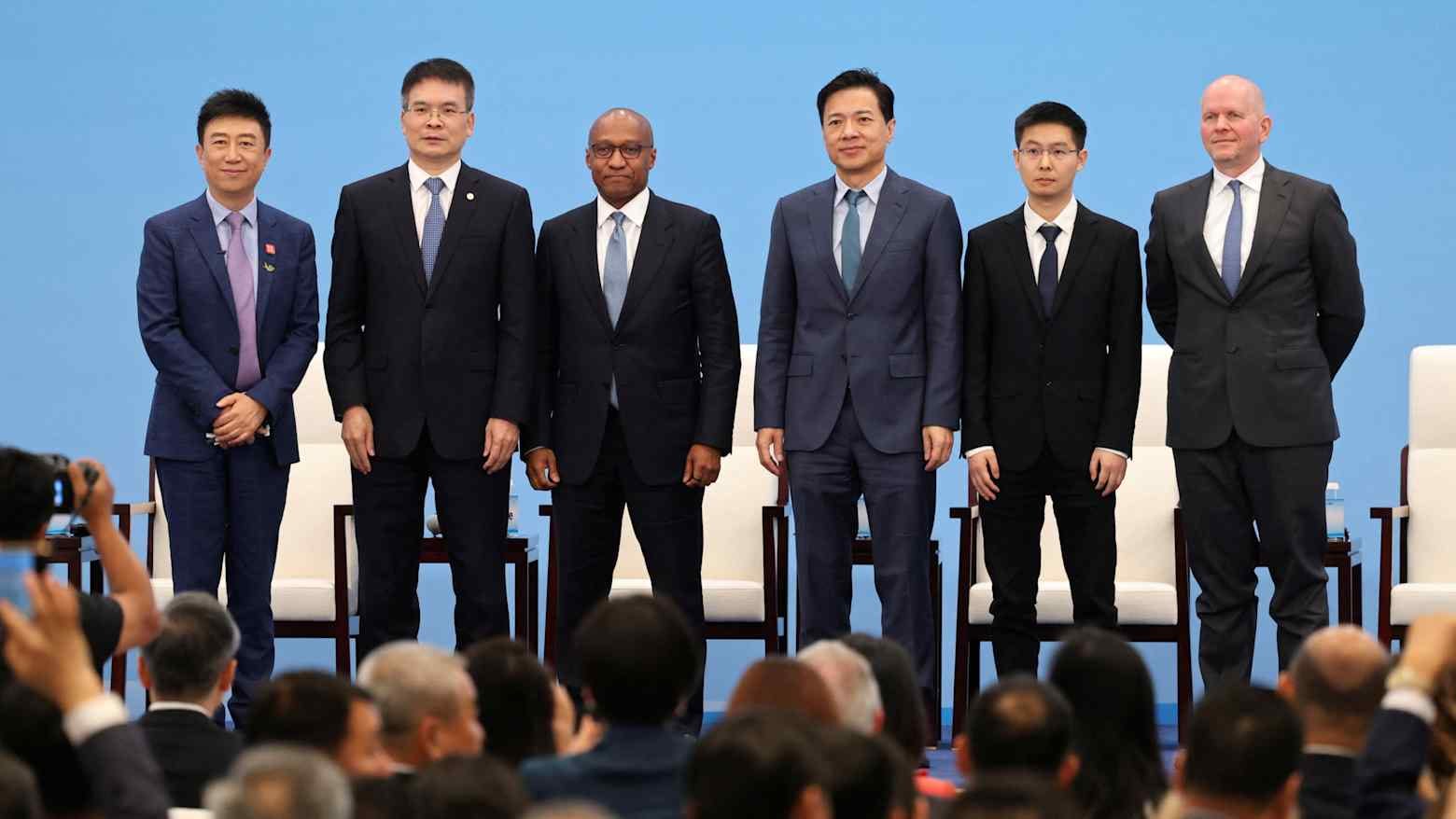
As I went through the news and statements on robotics and physical AI, one highlight for me was compute. Unitree founder Wang Xingxing said robotics’ future demand for computing power “may far exceed what most people imagine.” Since it comes from a hardware-driven founder, the comment is worth highlighting. Let’s dive into 6 key takeaways from the remarks of executives and officials.
In this piece
Unitree Expects Robot Compute Demand to Outrun Forecasts
Xiaomi’s Humanoid Interns on 8-Hour Factory Shifts
Shenzhen’s Robot Exports Are Mostly Cleaning Robots
RoboSense Is Moving From Lidar Into Touch, Cameras and Training Data
Galbot Asks to Extend Mutual Recognition to Robot Components and Clarify Remote Maintenance Data Rules
The Shenzhen Initiative Covers AI, and Robotics Support Comes From Shenzhen’s Districts
1. Unitree Expects Robot Compute Demand to Outrun Forecasts
Unitree founder Wang Xingxing named 3 challenges during APEC week.
(1) Model generalization is the hardest problem, he said. He wants one model that puts a robot to work right away in different homes and settings, without retraining for each new scene. He thinks the breakthrough “may come fairly soon.” His timeline has been moving closer. In August, around Unitree’s IPO, he said 2 to 3 years if things move fast, or 5 to 10 if they move slowly. In October, he said likely within the next 1 to 2 or 2 to 3 years.
(2) After the model breakthrough, scale is the next challenge, from Unitree’s tens of thousands of units a year today to millions or tens of millions. Manufacturing, reliability and after-sales service would all be tested. He also said China is strong in manufacturing and still has gaps in models, compute and talent.
(3) The third is compute. “In the future, I think the demand for computing power may far exceed what most people imagine,” he said, and he added that compute demand at the infrastructure layer is also very large. He listed robot safety as another open challenge.

In our Robot Brains deep dive (https://read.corematter.com/p/nvidia-jetson-robot-compute-costs), I split robotics compute demand into 3 sources, developing the models, the computers inside each robot and the servers that run deployed fleets. Onboard spend is being paid now, as NVIDIA raised Jetson prices by up to 101% in July. On the development side, Figure signed a $3.5bn compute deal with Nscale, with initial deployment targeted for the second half of 2027. I believe robotics compute revenue shows up in cloud for training first, ahead of edge chips, which are driven by deployment.
2. Xiaomi’s Humanoid Interns on 8-Hour Factory Shifts
Xiaomi founder and CEO Lei Jun said Xiaomi’s humanoid, CyberOne 02, is “interning” in a factory. During the full 8-hour shift, it recharged itself twice. In the video Xiaomi posted on November 4, the robots charged at 3 hours 2 minutes and again at 6 hours 3 minutes of work. Xiaomi has worked on robots for 6 years. Lei commented that the industry’s “imagination should exceed the auto industry.”
As we look into 2027, I anticipate more humanoid and autonomous robot companies report metrics like these. These are the numbers plant managers budget in. Xiaomi already shared some for an earlier station, a 90.2% success rate over 3 hours at a 76-second cycle in March, rising to 98% by July. Aside from shift length, metrics like human interventions per shift and throughput against a human on the same station would be great to disclose.
3. Shenzhen’s Robot Exports Are Mostly Cleaning Robots
Shenzhen exported Rmb13.4bn ($2.0bn) of robots in 1Q-3Q 2026, per Shenzhen Customs. Cleaning robots were Rmb11.7bn ($1.7bn) of it, or 86.6%. Robot exports to other APEC economies were Rmb4.9bn ($725mn).
The data still matters for the humanoid stack, because vacuums and lawn mowers are where lidar, small motors, batteries and navigation software reach consumer volumes and prices. RoboSense, for example, sells lidar into cleaning robots, lawn mowers and humanoids.
4. RoboSense Is Moving From Lidar Into Touch, Cameras and Training Data
One of the key themes at Core Matter is that 2027 is the year for components. RoboSense, the top supplier of lidar cameras, shipped 595,600 lidar units in Q3 2026, 450,400 for cars and 145,200 for robots. CEO Qiu Chunchao said they are adding spatial cameras, tactile sensors and finger joint modules to their lidar line. Their 1H2026 report guided tactile sensor deliveries to start in Q3 and volume deliveries of joint modules in Q4. Its sensors are also used with global partners to collect real-world task data for model training. Their new digital lidar line in Nanshan, Shenzhen will have a capacity of 500,000 units per year. For scale, RoboSense has planned 4mn units a year in capacity in total.
In my view, training data is leading demand for some components ahead of deployment, tactile sensing and capture kits especially. From speaking with data collection operators, I hear demand for multimodal data, especially tactile, has been exploding. And the main bottleneck is the capture kits. Sensor makers with production capacity, like RoboSense, that sell data capture kits will help meet this demand.
5. Galbot Asks to Extend Mutual Recognition to Robot Components and Clarify Remote Maintenance Data Rules
Liu Kun, a Galbot vice president, said cross-border flow of intermediate goods such as joint modules, sensors and chips is the main blocker for robot export delivery times and total cost. APEC has mutual recognition arrangements for telecom and electrical equipment, where one market accepts test reports and certificates from another market’s approved labs. According to Liu, completing whole-robot certification on that basis helped cut customs clearance for embodied AI companies from about 2 weeks to 2-3 days. Components need their own list, so she asked APEC for a mutual recognition list for robot component standards.
Another request from Galbot was clearer data rules for maintaining robots remotely overseas. As robot makers move from selling single robots to operating and maintaining them, today’s trade rules for combined hardware and software products are not yet detailed enough. She wants clearer cross-border data rules so an operating model proven in one market can be copied to the next. This is a contested area. The US national security determination behind the FCC’s July covered list names data collection and remote command among the risks from foreign-produced robots. I covered the FCC rule in July here:

6. The Shenzhen Initiative Covers AI, and Robotics Support Comes From Shenzhen’s Districts
The CEO Summit closed on November 18 with the Shenzhen Initiative, a set of business recommendations to APEC leaders. Xinhua called it the summit’s debut outcome document in initiative form in its 30-year history. The initiative’s AI language sits in its innovation and growth section, covering an AI governance framework, “AI+” cooperation and support for small businesses adopting AI. Robotics support comes from the district level.
Qianhai and Bao’an run an Embodied Intelligence Port, launched in May, with platforms including a national AI application pilot base, a Guangdong AI and robotics export service center and a global robot selection center. Bao’an reports more than 600 AI and robotics companies, including Tencent and 9 listed companies, in an industry cluster it sizes at close to Rmb60bn ($8.9bn).
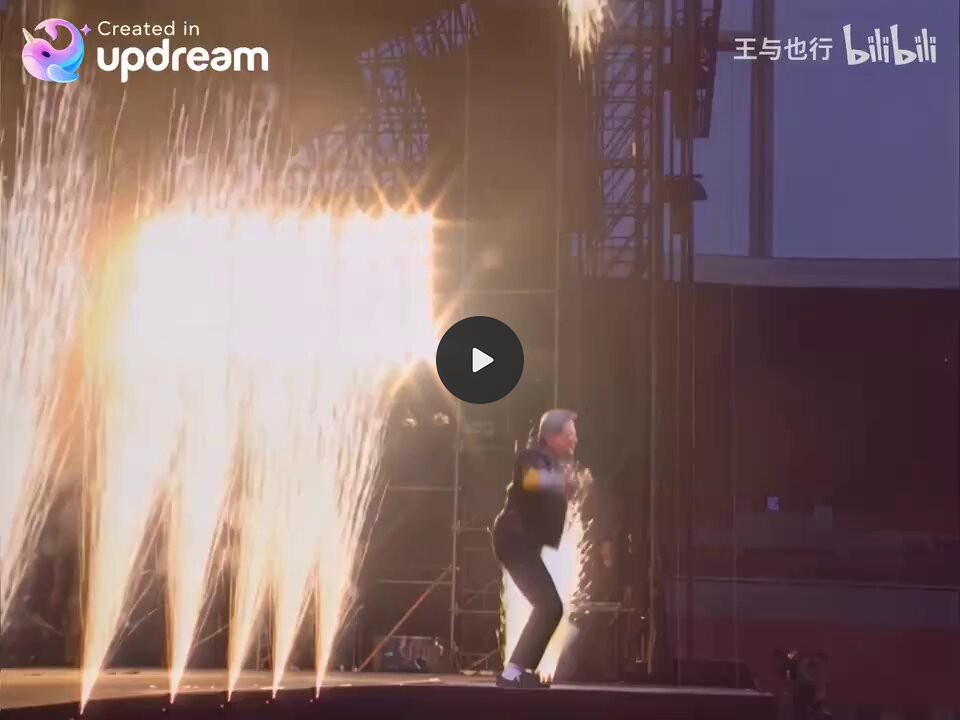
PS: On Jensen’s return, this is probably my favorite AI-generated video of 2026. I’ve watched it so many times and it still makes me laugh.

Footnotes
1. Rmb figures are converted at Rmb6.7045 per $, the Federal Reserve H.10 rate for September 30, 2026.
Sources
1. Sina Finance, Wang Xingxing remarks at the APEC CEO Summit (speaker transcript, not reviewed by the speaker), November 17, 2026. https://finance.sina.com.cn/hy/hyjz/2026-11-17/doc-iniyzhhm7688060.shtml
2. IT Home, Wang Xingxing on generalization and compute, November 17, 2026. https://m.ithome.com/html/1028220.htm
3. CLS, Wang Xingxing at the World Robot Conference, August 20, 2026. https://www.cls.cn/detail/2459117
4. IT Home, Wang Xingxing at the Unitree partner conference, October 22, 2026. https://www.ithome.com/1/016/326.htm
5. Caixin Global, Nearing AI Robotics Breakthrough Would Strain Production, Unitree Founder Says, November 17, 2026. https://www.caixinglobal.com/2026-11-17/nearing-ai-robotics-breakthrough-would-strain-production-unitree-founder-says-102505751.html
6. NVIDIA, NVIDIA Board Reinstates Jensen Huang, November 23, 2026. https://nvidianews.nvidia.com/news/nvidia-board-reinstates-jensen-huang-as-president-ceo-and-board-director
7. Wall Street Observer, Jensen Huang Reinstated as Nvidia CEO, November 23, 2026. https://wallstreetobserver.com/articles/jensen-huang-reinstated-nvidia-stock
8. CLS, Lei Jun on AI commercialization at APEC, November 17, 2026. https://www.cls.cn/detail/2536979
9. CLS, Xiaomi robot completes 8-hour factory shift, November 4, 2026. https://www.cls.cn/detail/2524900
10. Electrek, Xiaomi’s humanoid robots work a full 8-hour shift in its EV factory, November 4, 2026. https://electrek.co/2026/11/04/xiaomi-humanoid-robot-8-hour-shift-ev-factory
11. NetEase (Chaoyong AI), APEC embodied AI recap citing Shenzhen Customs export breakdown, November 20, 2026. https://www.163.com/dy/article/LC77DBJG0556MV0F.html
12. CLS via Eastmoney, Shenzhen Customs APEC export data and Galbot remarks, November 19, 2026. http://finance.eastmoney.com/a/202611193935171682.html
13. People’s Daily via China Customs, New tariff lines for intelligent bionic and cleaning robots, August 5, 2026. http://gdfs.customs.gov.cn/guangdong_sub/2026-08/06/article_2026080703315860075.html
14. RoboSense, Q3 2026 LiDAR sales, October 9, 2026. https://www.robosense.ai/en/news-show-2004
15. RoboSense, 2026 Interim Report, September 23, 2026. https://www.hkexnews.hk/listedco/listconews/sehk/2026/0923/2026092300379_c.pdf
16. Xinhua Finance, RoboSense Nanshan line, November 5, 2026. https://www.cnfin.com/gs-lb/detail/20261105/4491320_1.html
17. Phoenix Finance (Securities Times), Qiu Chunchao interview, November 17, 2026. https://finance.ifeng.com/c/8y8227lpnDl
18. Eastmoney, RoboSense at APEC 2026, November 20, 2026. http://caifuhao.eastmoney.com/news/20261120164948499442130
19. APEC, APEC-TEL MRA and Electrical and Electronic Equipment MRA. https://apec.org/what-we-do/som-steering-committee-on-economic-and-technical-cooperation/telecommunications-and-information/apec_tel-mra
20. Core Matter, The FCC did not ban Chinese robots, July 30, 2026. https://read.corematter.com/p/the-fcc-did-not-ban-chinese-robots
21. Core Matter, The Economics of Robot Brains (Part 1), November 10, 2026. https://read.corematter.com/p/nvidia-jetson-robot-compute-costs
22. Xinhua via gov.cn, APEC CEO Summit 2026 releases Shenzhen initiative, November 18, 2026. https://english.www.gov.cn/news/202611/18/content_WS6afda7bec6d00ca5f9a0e6b0.html
23. Shenzhen Government Online, Bao’an embodied AI community launch, September 2, 2026. https://www.sz.gov.cn/cn/xxgk/zfxxgj/gqdt/content/post_12964751.html